1. Standard Tamil Keyboard Layout
High resolution image suitable for printing.
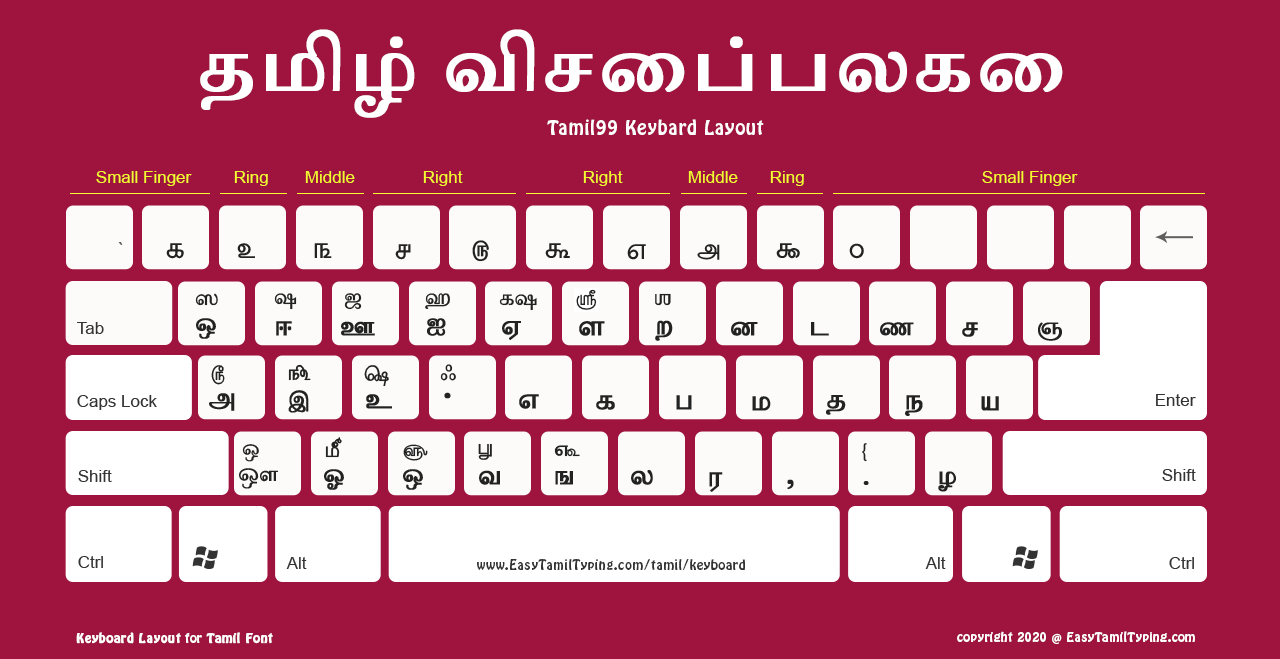
We have five different Tamil keyboard layouts for you to download on your computer. Once downloaded — you can use it as a reference to type in Tamil either on Word document or any other text editor. You also need to download the matching Tamil fonts.
High resolution image suitable for printing.
High resolution image suitable for printing.
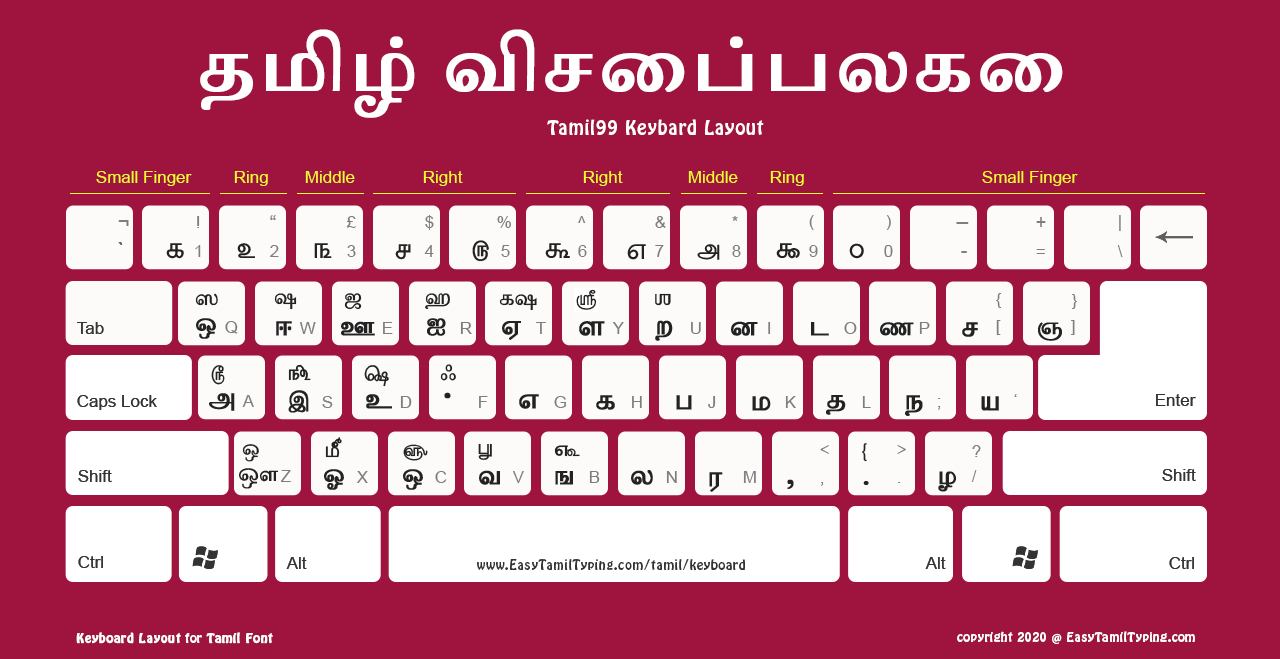
High resolution image suitable for printing.
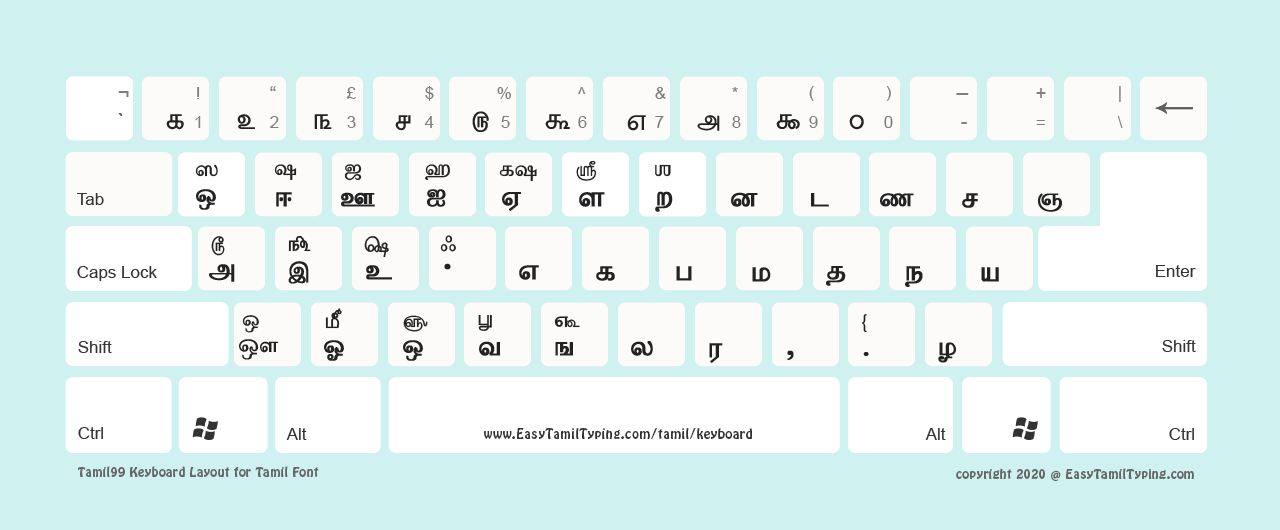
High resolution image suitable for printing.
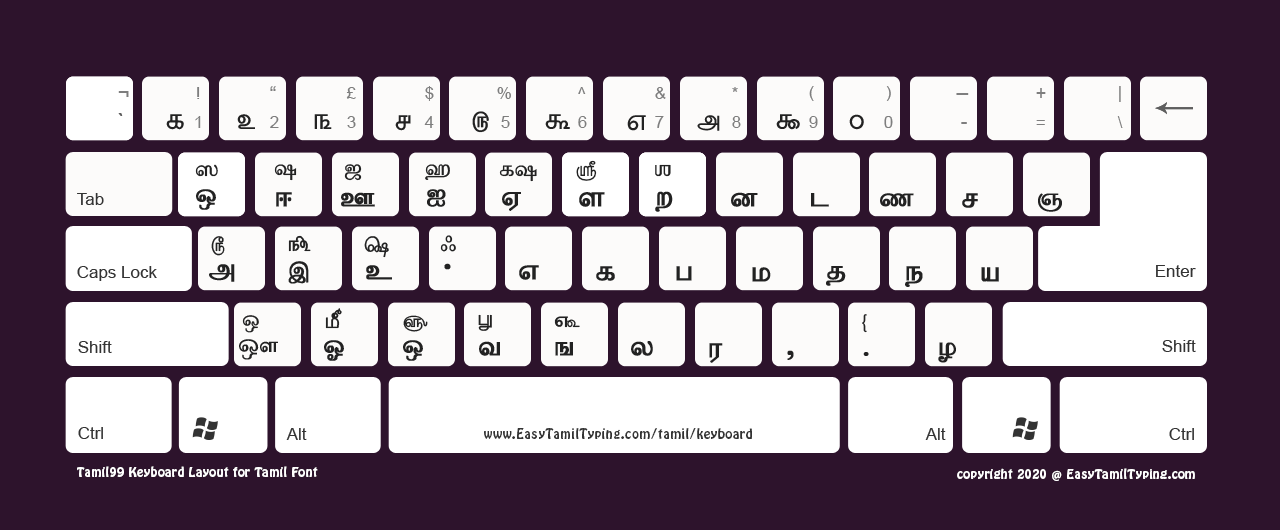
High resolution image suitable for printing.
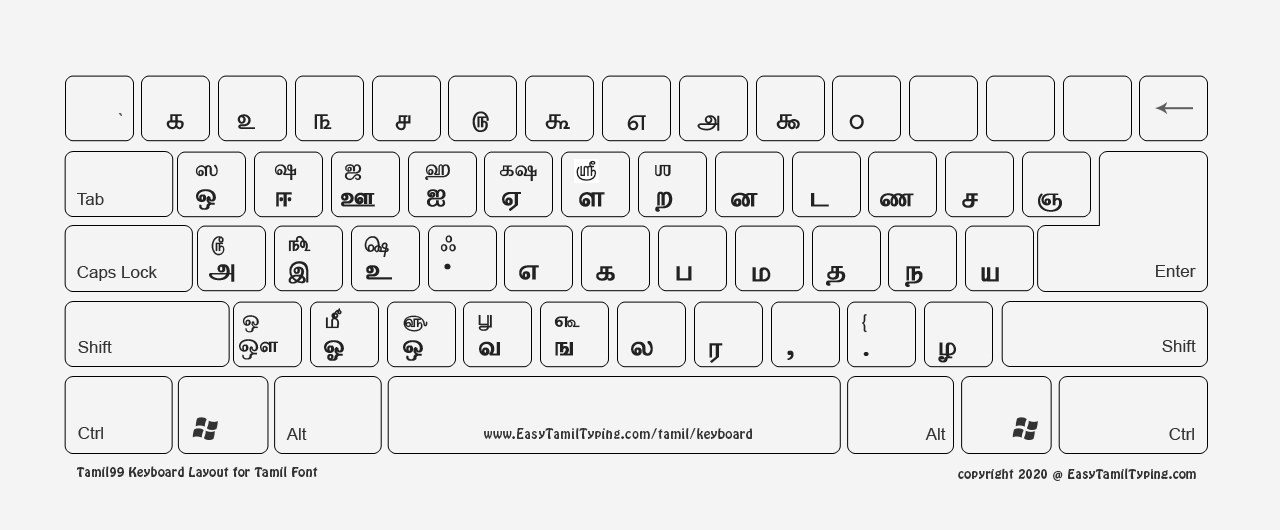
Here's our systematic approach to setting up Tamil typing.
Acquire your Tamil font — browse our curated fonts library and install the ideal typeface for your Tamil writing needs.
Obtain your keyboard reference using this reliable download process:
Click on your preferred keyboard layout from our collection
Right-click when the high-resolution image appears
Choose "Save image as..." and save to your preferred location
Establish your typing environment by opening any word processor and selecting the Tamil font you installed earlier.
Launch your Tamil writing session! Position your keyboard image for easy viewing while you compose beautiful Tamil text.
Expert recommendation: Limited screen space? Our keyboards deliver outstanding print clarity — print one for a reliable desktop reference that's always ready when you need it!
Designed for Tamil99 keyboard layout — accurately mapped to provide an authentic Tamil typing experience with correct character placement.
Meets professional standards — designed for typists, and businesses requiring error-free Tamil documentation.
Supports various display formats — perfect for presentations, reference guides, digital displays, and high-quality printing.
Offers unrestricted licensing — use freely for academic research, commercial projects, educational materials, or personal correspondence.
Indian Culture and Lifestyle Content Type: Analytical Overview Paper Abstract Indian culture, one of the world’s oldest continuous civilizations, presents a complex tapestry of philosophical depth, ritualistic diversity, and adaptive modernity. This paper examines the core pillars of Indian lifestyle—social structures, culinary traditions, attitudinal frameworks, and festival cycles—while analyzing the contemporary tensions between ancient customs and 21st-century globalization. It argues that rather than eroding tradition, modernity in India has created a dynamic synthesis where hyper-connectivity coexists with hierarchical family structures, and global consumerism merges with localized spiritual practices. 1. Introduction To understand Indian lifestyle is to navigate a series of apparent contradictions. It is a land where artificial intelligence startups operate alongside caste-based panchayats (village councils); where a teenager might post a selfie on Instagram before performing Surya Namaskar (sun salutation) at dawn. Unlike Western linear progressions where "modern" replaces "traditional," Indian culture operates on a palimpsest model—new layers of meaning are written over old ones without fully erasing the base. This paper dissects the key domains of this lifestyle, focusing on family, food, faith, and festivity. 2. The Social Architecture: The Joint Family and Its Evolution The foundational unit of Indian lifestyle has historically been the joint family (undivided family residing in a single household). This system serves as a social security net, a daycare system, and an economic buffer. Values such as kutumb (family) and samman (honor) dictate career choices, marriage partners, and daily schedules.
The Dynamic Tapestry: Continuity and Change in Indian Culture and Lifestyle vb bhandari machine design pdf
However, urbanization and economic liberalization (post-1991) have catalyzed a shift toward nuclear families. In metropolitan hubs like Mumbai, Bangalore, and Delhi, "sandwich generation" households—adults caring for aging parents and young children simultaneously—are emerging. Yet, the cultural ideal persists: even in nuclear setups, major life decisions (education, property, arranged marriage vetting) often require remote consensus via WhatsApp groups, demonstrating technological reinforcement of traditional bonds rather than their dissolution. Indian cuisine is not monolithic. The lifestyle revolves around a fractal logic of regionality: the mustard-oil heavy fish curries of Bengal, the fermented bamboo shoots of Nagaland, the lentil-based dal-bati of Rajasthan, and the coconut-infused avial of Kerala. the fermented bamboo shoots of Nagaland
| Traditional Norm | Modern Disruption | Lived Reality | | :--- | :--- | :--- | | Arranged marriage by family | Love marriage & dating apps | "Semi-arranged" (parents filter, children approve via coffee dates) | | Vegetarianism as virtue | Rise of artisanal butchery & beef politics | Regional hypocrisy: high meat consumption in Kerala/Bengal, strict veg in Gujarat | | Joint family care for elderly | Nuclear migration | "Remote care" (CCTV cameras, monthly visits, hired nurses) | | Hindi/Sanskrit dominance | English-medium aspiration | Hinglish (code-switching in every sentence) | Indian culture and lifestyle are not static artifacts to be preserved in a museum, nor are they being erased by Westernization. Instead, they exhibit a high degree of cultural agility —the ability to adopt foreign forms (pizza, jeans, corporate hierarchy) while retaining indigenous essence (commensality, hierarchy, cyclical time). the lentil-based dal-bati of Rajasthan
 Sambhu Raj Singh ·