How To See Blocked Contacts On Mac [hot] File
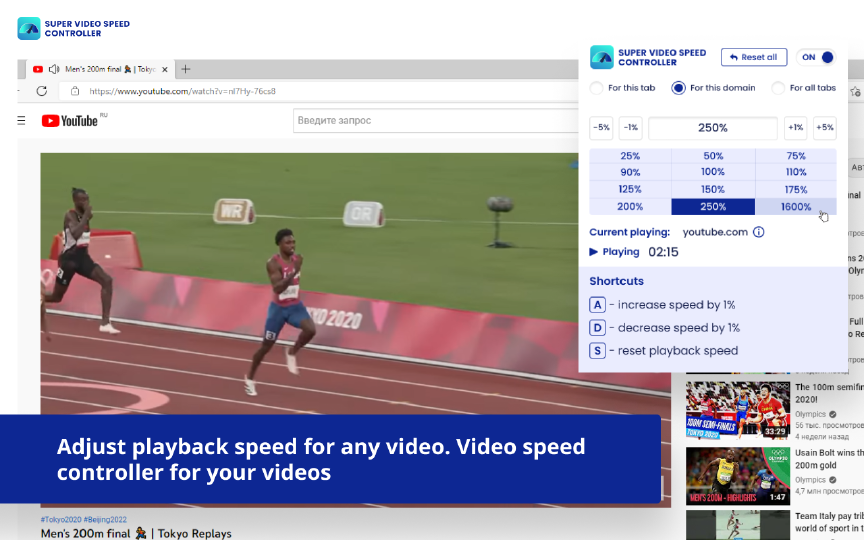
Adjust playback speed for any video. Video speed controller for your videos
 DOWNLOAD NOW
Adjust playback speed for any video. Video speed controller for your videos
DOWNLOAD NOW
Super Video Speed Controller allows to increase or decrease playback speed on any web site.
Features:
🎥 Work almost everywhere
🎥 You can adjust using presets or set a custom speed as a percentage
🎥 Use shortcuts
Quick Start: Find the “Super Video Speed Controller” icon by opening the menu under the “puzzle” icon on the toolbar.
 DOWNLOAD NOW
Download and install the extension from the Google Chrome Webstore or Edge Add-ons marketplace
Steps:
Open the video in the active tab. Start playback.
Adjust using the extension’s popup:
The technology works both on large sites and on little-known ones. The coverage of the sites is 99%
You can put it as a percentage and specify the exact value (e.g. +17; -29). Unlike, for example, the Youtube player, where you can put only certain values that are offered to you.
Use the following Keyboard shortcuts:

Super Video Speed Controller for Chrome is available in Chrome Web Store

Super Video Speed Controller for Edge is available in the Edge Add-ons marketplace.
Arthur Kline was a man who organized his digital life with the precision of a museum curator. His MacBook Pro, a silver slab he’d named “Polaris,” was a temple of tidy folders, archived emails, and a Contacts app so clean it could be used for medical research. Every number had a name, every name had a note, and every note had a purpose. Except for one.
He signed into iCloud.com on a browser. He went to Contacts. He clicked the gear icon and selected “Preferences.” There it was: a tab labeled “Blocked.” He clicked it. A list of email addresses and phone numbers appeared. Hers was there: elena.c.88@icloud.com . But that was it. No context. No timestamps of when she was blocked. No log of attempted calls. Just the raw, sterile address. He could unblock her, but that would send a notification to her device—a digital knock on a door he had no right to open. how to see blocked contacts on mac
He tried a third-party app, “iMazing,” which offers deep access to iOS and Mac backups. He plugged his iPhone in, loaded a backup from two weeks before the breakup, and extracted the Blocked.plist file. It was a list of hashed identifiers—strings of gibberish like 7A9B3F0C... . Useless. Apple hashes blocked contacts to prevent exactly what Arthur was trying to do: reverse-engineer a relationship from a database. Arthur Kline was a man who organized his
He learned a hard truth that night: Apple prioritizes privacy and security over user “peeking.” The block list is intentionally opaque. You cannot see a blocked contact because the system’s job is to pretend they do not exist . To the operating system, a blocked contact is not a hidden file; it is a null reference . When you block someone, the OS stops asking the question, “Should this person be allowed to contact you?” Instead, it simply never looks them up. Except for one
At 2:47 AM, Arthur poured the last of the whiskey into a glass and stared at the ceiling. The technical answer, he now understood, was simple: You can see them in iCloud Contacts settings, or in FaceTime’s preferences, or in Messages’ “Filtered” view (if you enable “Filter Unknown Senders”), but there is no universal “Blocked Persons” folder. The information is fragmented, scattered, and deliberately dull.
sudo dmesg | grep -i block Nothing.
The Ghost in the Address Book