Gluten-free Graham Crackers Crust Hot! -
CabiSanté est conçue pour vous aider à gérer toute l'activité de votre cabinet médical, de la salle d'attente jusqu'aux payements et la comptabilité avec toute simplicité et efficacité.

CabiSanté est conçue pour vous aider à gérer toute l'activité de votre cabinet médical, de la salle d'attente jusqu'aux payements et la comptabilité avec toute simplicité et efficacité.
Of course, the path to a perfect gluten-free crust is littered with potential pitfalls. The greatest enemy is sogginess, a particular threat in no-bake pies. Traditional gluten-containing crumbs absorb fat and release it slowly; gluten-free starches can behave erratically, sometimes soaking up moisture from a creamy filling and turning the crust into a pasty sludge. The solution is a pre-bake—toasting the crust in the oven until it is fragrant and set, effectively "sealing" the starches with butter before the wet filling is added. Another challenge is texture; too much gum or binder can create a slimy or excessively chewy crust, while too little results in a crust that crumbles into dust at the touch of a fork. The perfect gluten-free crust should cohere when sliced, yet disintegrate willingly into sandy, buttery particles on the tongue.
Beyond the technical, the gluten-free graham cracker crust carries a deeper cultural significance. For the estimated 1 in 100 people worldwide with celiac disease, and the millions more with gluten sensitivity, desserts are often a landscape of exclusion—birthday cakes not eaten, pie slices politely declined. The existence of a well-made gluten-free crust is an act of inclusion. It restores the nostalgic ritual of pressing crumbs into a pan with one’s fingers, the intoxicating smell of butter and honey toasting in the oven, and the simple joy of a cleanly sliced wedge of cheesecake. It transforms a dietary restriction from a sentence of deprivation into an invitation for creative exploration. gluten-free graham crackers crust
The most common solution is found in the ready-made gluten-free graham-style cracker. Brands like Kinnikinnick, Schär, and Pamela’s have become pantry heroes, formulating blends of rice flour, tapioca starch, potato starch, and sorghum flour to mimic the original. These ingredients serve distinct purposes: rice flour provides a neutral base, tapioca and potato starches add lightness and a delicate crispness to prevent density, and sorghum flour contributes a subtle, nutty sweetness reminiscent of whole wheat. To replicate the binding function of gluten, manufacturers turn to xanthan gum or guar gum, polysaccharides that create a viscous, gel-like network that holds the crumbs together. The result is a cracker that, when blind-tasted, is remarkably close to its conventional ancestor—perhaps slightly more tender, less snappy, but possessing the requisite honeyed warmth and toasty notes. Of course, the path to a perfect gluten-free
In conclusion, the gluten-free graham cracker crust is far more than a medical accommodation. It is a case study in culinary problem-solving, where the limitations of one set of ingredients give birth to novel textures and flavors. Whether achieved through a store-bought cracker blend that deftly mimics tradition, or a nut-and-honey reimagining that surpasses it, this crust stands as a testament to the resilience and ingenuity of home cooks and food scientists alike. It reminds us that the best recipes are not rigid commands but living dialogues between ingredients, technique, and necessity. And, when done right, it proves that a crust can be gluten-free, and still be the very best part of the pie. The solution is a pre-bake—toasting the crust in
In the pantheon of culinary comfort, few preparations are as deceptively simple yet emotionally resonant as the graham cracker crust. It is the foundation of the classic cheesecake, the soul of the key lime pie, and the crisp, buttery vessel for no-bake summer desserts. For most of the 20th century, its existence was unremarkable—a humble mix of crushed crackers, sugar, and melted butter. However, the rise of celiac disease awareness and non-celiac gluten sensitivity has forced a culinary reckoning: how does one replicate the unique, honeyed, nutty, and delicately crisp character of a graham cracker crust without the gluten that gives it its very name? The answer, arrived at through necessity and perfected through innovation, is the gluten-free graham cracker crust—a triumph not of simple substitution, but of thoughtful culinary alchemy.
To understand the challenge, one must first appreciate the structural genius of the original graham cracker. Invented in the 19th century by Presbyterian minister Sylvester Graham as a bland, unsweetened health food, the modern cracker is a marvel of wheat flour engineering. Gluten, the protein network in wheat, provides the tensile strength that allows the dough to be rolled thin and baked into a crisp, snap-prone wafer. When crushed and combined with fat, those gluten-bonded crumbs maintain a pleasant, granular texture that provides both structure and a satisfying sandy mouthfeel. Without gluten, a standard cracker becomes a brittle, dusty, and often gritty disappointment. The challenge, therefore, is not merely to remove wheat, but to architecturally rebuild the cracker’s essence using alternative flours and binders.
Gérer tous les aspects du dossier de patient (Ordonnance, Documents, Rendez-Vous, payement ...) dans une seule fenêtre.
Soyer rapide et précis pour localiser vos dossiers de patients grace à la recherche rapide ou le filtre avancé.
Marquer vos patients en catégories, en vert (MC) ou en rouge (Risque) pour attirer l’attention sur ceux qui nécessitent un suivi particulier.


Vous avez la possibilité d'utiliser le modèle d’ordonnance standard ou le modèle préimprimé qui vous permettras d'imprimer directement sur les ordonnances dont vous disposer.
L'ordonnnace est 100% personalisable.
Ne pas gaspiller vos ordonnances déjà achetés, utiliser le modèle pré-imprimé pour imprimer dessus.
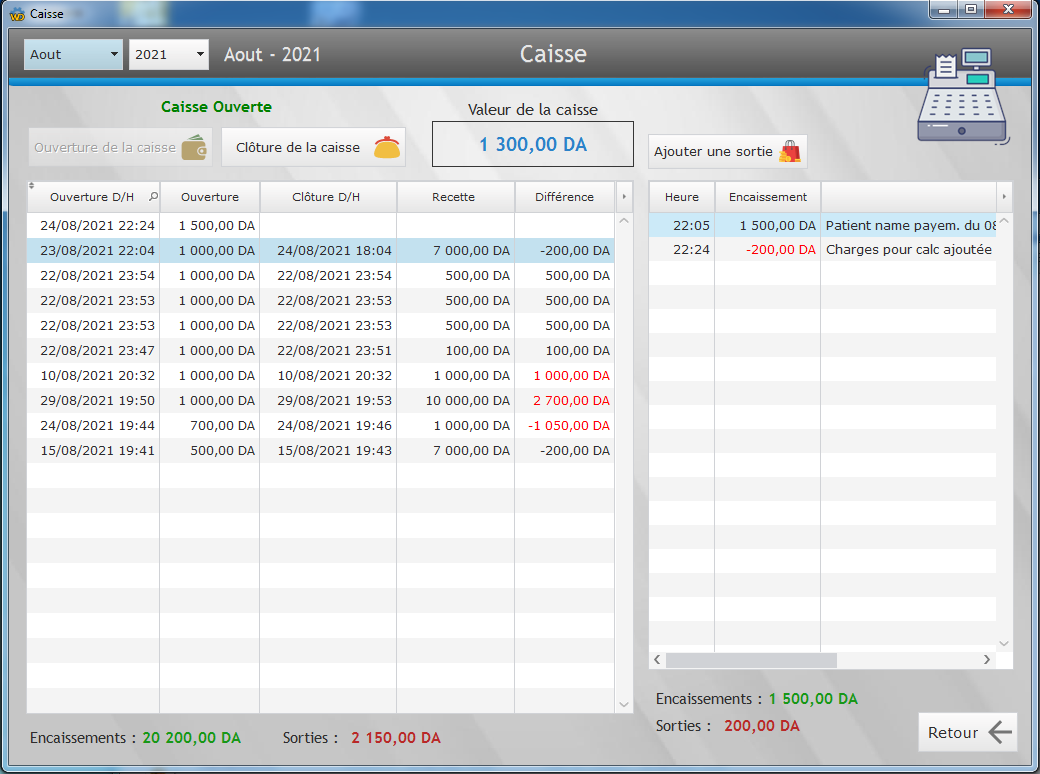
CabiSanté offre un module de gestion de la caisse et de la comptabilité qui vous permet d'avoir une visibilité absolue et faire le suivit de toutes vos transactions monétique.
Pourcentage du profil remplaçant(e) calculé automatiquement.
L'acces aux informations concernant les payements est limité pour les profils assistant(e) et remplaçant(e).

CabiSanté offre deux modes d'utilisation, en locale (standalone) ou en réseau dans le cas de plusieurs utilisateurs.
La gestion de la salle d'attente est disponible pour le profil assistant(e).
CabiSanté offre la possibilité à plusieurs médecins de travailler en même temps.
8000 DA / An
Abonnement annuel40 000 DA
licence perpétuelle