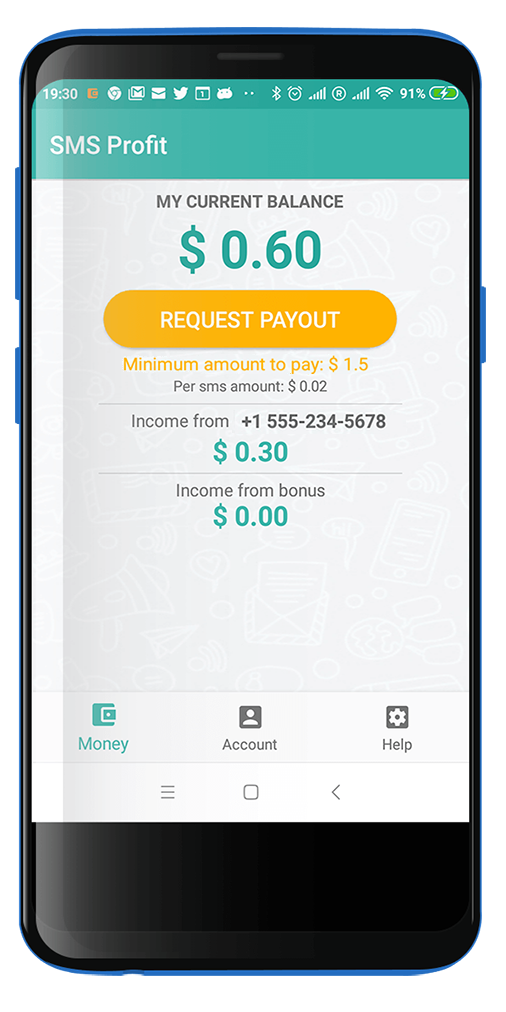
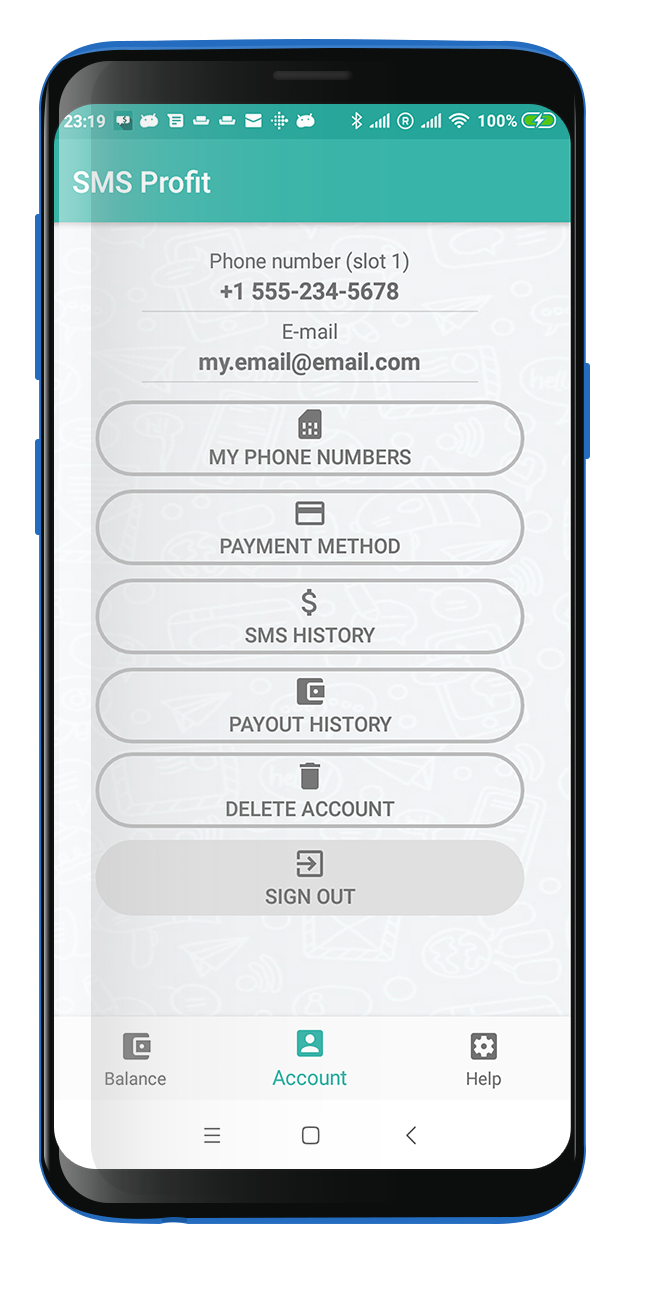
All you have to do is run the SMS Profit app and allow us to send you SMS. Everything works in the background so you can earn real money online for doing nothing.
More registered numbers, more money! Earn for every SMS
test received.
Contact us for custom deal!
By using our app, you help us to improve the quality of SMS delivery. In return, you will be rewarded for each SMS you receive.
Read more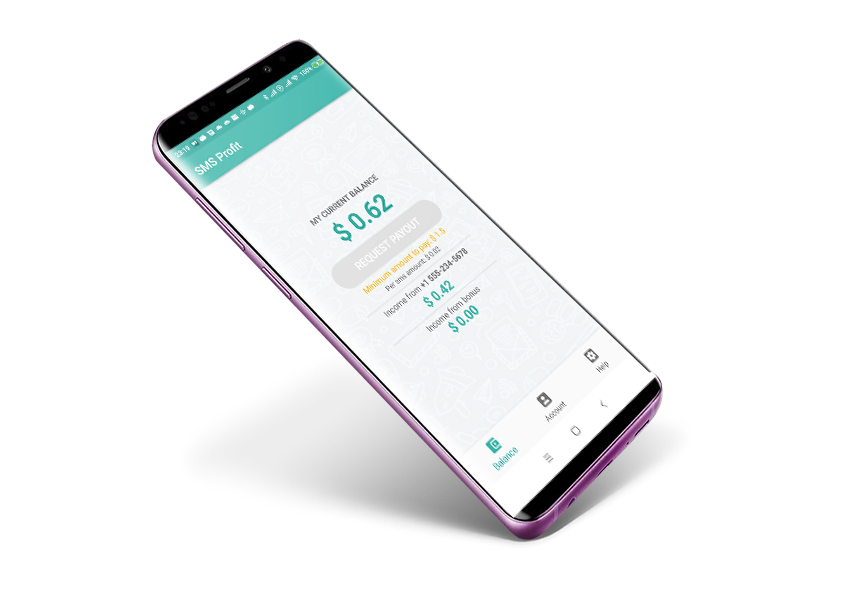
Just run the app, make sure your phone is always connected to the internet and get paid for SMS you receive for any phone number you verify. With SMP Profit you don’t need to do anything else to make money.
Withdraw money from the app to the wallet of one of the world’s most popular payment systems.
All you need to sign up is an email address and at least one
phone number. You can register more than one device and more
than one phone number on the same account if you want to earn
more and faster!
[Note: Use the same email account, if you often change email
accounts with the same phone numbers, our system could
automatically block your account or phone number!](note: Use
the same email account, if you often change email accounts
with the same phone numbers, our system could automatically
block your account or phone number!)
You don’t need to invest anything, in fact you will be rewarded with $0.5 for your registration.
It is simple. Download SMS Profit to your Android phone.
Register with email.
Read and accept the disclaimer. You’ll receive an email with
a link to confirm that this address is yours.
[Note: The system may block your account if you use the same
payment address or phone number on multiple accounts! You
can verify multiple numbers with only one account.](note:
The system may block your account if you use the same
payment address or phone number on multiple accounts! You
can verify multiple numbers with only one account.)
Enter your phone number and verify.
We can only send you tests if your device is online on the
internet. The more phone numbers you register, the more
money you earn.
Try to keep the app running and online all the time. Always, for best performance.
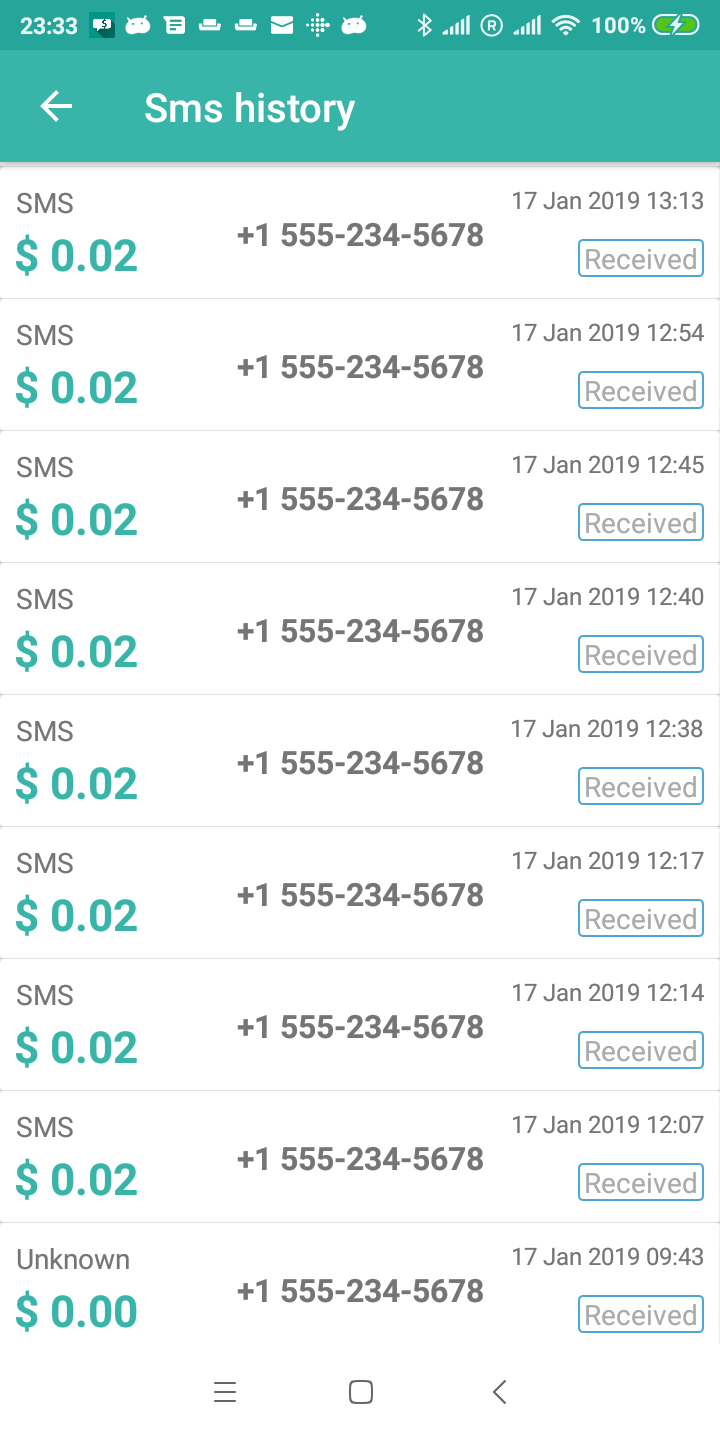
You will start receiving SMS from our system. SMS containing our ID, usually random letters and numbers, are processed and sent back to our system.
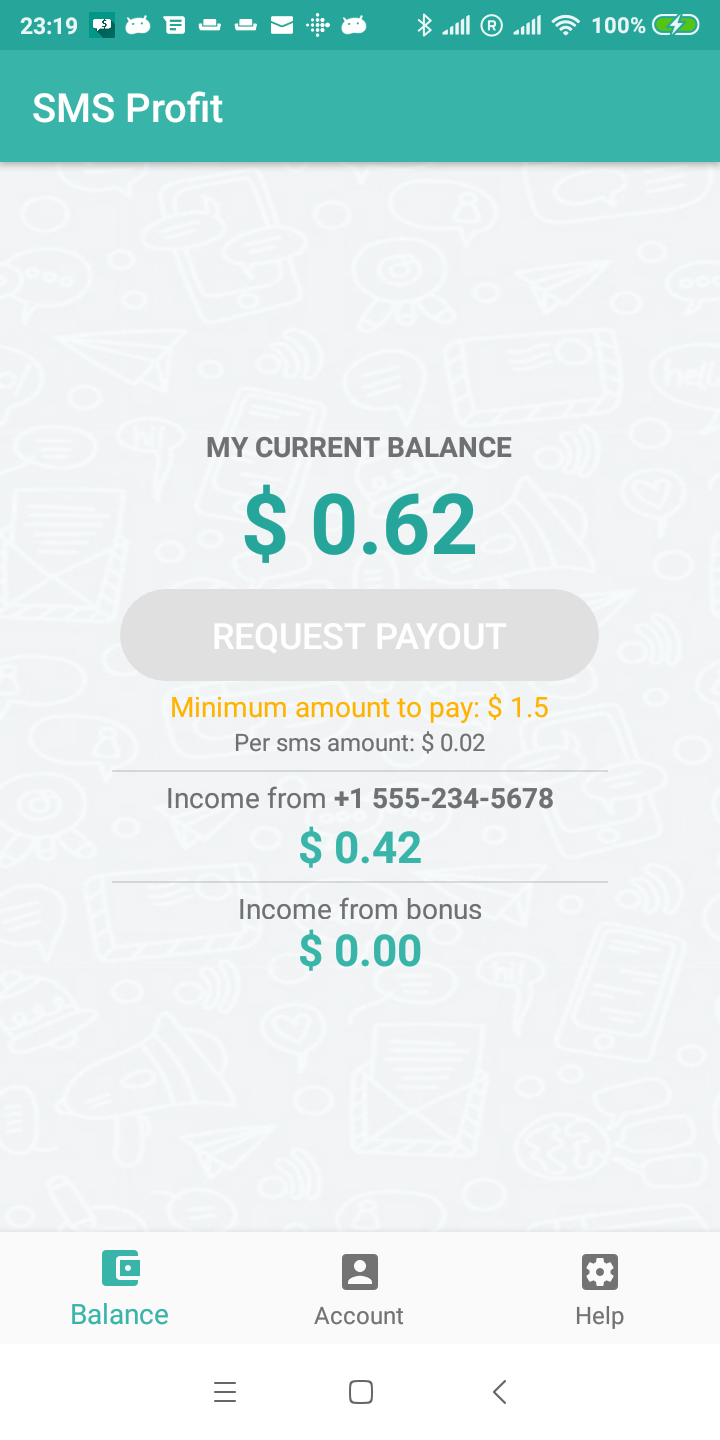
You get paid for each SMS test received. You can request money withdrawal as soon as you reach the minimum balance. You will receive your real money in a few days.
In the end, the enduring appeal of the “flipbook codepen” is a testament to a fundamental human desire: to coax life from stillness. Whether through a charcoal sketch on a notepad or a requestAnimationFrame loop in a browser window, we remain fascinated by the illusion of motion. CodePen has become the modern marginalia—a place where we flick through sequences of code and image, watching small stories unfold one frame at a time. The thumb may be gone, but the magic remains.
CodePen, as a social development environment, amplifies this effect. It strips away the complexity of file management and deployment, leaving only the essential trio of HTML, CSS, and JS. A developer can fork a classic flipbook of a galloping horse (echoing Eadweard Muybridge) and remix it with their own drawings or a live camera feed. The platform’s instant preview and community sharing transform a solitary notebook trick into a collaborative, global gallery. flipbook codepen
In the quiet corner of a 19th-century schoolroom, a child flicks the corner of a notebook. A stick figure, drawn slightly differently on each page, begins to dance. This simple act—the rapid flipping of sequential images—gave birth to the flipbook, one of the earliest and most intimate forms of animation. Today, this analog magic has found an unexpected home on a thoroughly modern platform: CodePen. In the end, the enduring appeal of the
Yet, the translation is not seamless. The digital flipbook loses the tactile feedback of paper—the friction of the pages, the weight of the stack, the satisfying snap of a thumb release. It gains, however, superpowers: infinite pages, undo buttons, sound synchronization, and interactivity (a click could reverse the flip or speed it up). The CodePen flipbook is not a replacement but a reinterpretation. It is a conversation between the haptic past and the programmable present. The thumb may be gone, but the magic remains
A search for “flipbook codepen” reveals a fascinating digital museum. Developers and designers have not simply scanned old flipbook pages; they have re-created the mechanism using HTML, CSS, and JavaScript. In these online pens, a canvas element cycles through a sprite sheet, or an array of images updates on a rapid timer, mimicking the thumb’s flick. The user may click and drag a slider, hover over a sequence, or watch an auto-playing loop. The physics are different—pixels instead of pencil lead, a mouse click instead of a thumb—but the core principle of persistence of vision remains delightfully intact.
Why does this antiquated art form thrive on a platform designed for modern web applications? First, the flipbook is an ideal pedagogical tool. For a beginner learning JavaScript, creating a frame-by-frame animation teaches core concepts: arrays, intervals, event listeners, and rendering loops. It is a "Hello World" for motion. Second, the flipbook embodies a specific aesthetic of imperfection. Unlike the smooth tweening of CSS transitions or the mathematical precision of WebGL, a flipbook animation celebrates the stutter, the handmade quality of discrete jumps. It feels tangible even in a virtual space.
Try it now at
*Works on Android 5.1 and above.
